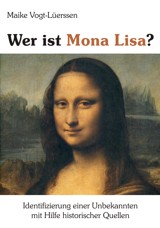
Wer ist Mona Lisa? – Identifizierung einer Unbekannten mit Hilfe historischer Quellen
als Buch bei amazon.de: 172 Seiten, mit Stammtafeln und 136 Bildern (130 Bilder in Farbe), Independently published, 1. Auflage, ISBN 978-1-9831-3666-5, € 29,31

Eine wunderschöne Adventszeit, ein frohes Weihnachtsfest und einen guten Rutsch ins Neue Jahr 2026 wünscht Ihnen, meine lieben Leser und Leserinnen, Ihre Maike Vogt-Lüerssen von Downunder.
Möge das nächste Jahr Ihnen Gesundheit und viel Liebe schenken. Ganz besonders möchte ich mich bei denjenigen bedanken, die meine Bücher und E-Books gekauft haben und mir damit ermöglichen, meiner großen Leidenschaft, der Geschichte, weiterhin nachgehen zu können.
Gaston war das fünfte Kind und der dritte Sohn des französischen Königs Heinrich IV. (1553-1610) und seiner zweiten Gattin Maria de' Medici (1575-1642). Er erblickte das Licht der Welt am 25. April 1608 und starb am 2. Februar 1660. Sein ältester Bruder war der französische König Ludwig XIII. (1601-1643).
Gaston im Alter von 14 Jahren im Jahr 1622: "The young Duke of Orleans at this period became a daily visitor at the lever of the Queen [Anna] his sister-in-law. Gaston was a beautiful forward boy of fourteen, idolized by his mother for his sprightly wit, and for his apparent devotion to herself. The brothers [Gaston und sein ältester Bruder Ludwig XIII.], in character, were entirely opposite. Louis XIII. resembled his father, Henri IV., in his contempt of soft luxury; and his readiness to submit to temporary privation. Monsieur [Gaston], on the contrary, was fastidious, luxury-loving, and pleasure-seeking. His raiment was perfumed, and made of the most costly fabrics; rings glittered on his white fingers; and his fair long hair was adjusted to perfection. The dancing of the young prince was pronounced to be exquisite; his voice was melodious; he excelled in the composition of charades ... Beneath this effeminate exterior, nevertheless, the heroic spirit of his ancestors of Albret slumbered. Monsieur showed an early predilection for arms; his fencing was admirable; he was an expert archer; and rode on horseback with an ease and grace which always excited the envy of the King [seines Bruders]. Monsieur's inclination for magnificence and costly ornamentation pervaded all his pursuits. While his brother [Ludwig XIII.] contented himself with snaring magpies and small birds, Gaston, at this period, having just attained his majority, and therefore becoming master of his patrimony, set up a hunting establishment on a grand scale at his château of Montargis; where he built kennels and stables ... The Duke at this period divided his leisure, when in Paris, between the Louvre and the Luxembourg; spending hours at the latter place with his royal mother in the studio of the maestro, Rubens, whom Marie de' Medici had lured from Antwerp to embellish her palace by his immortal pencil. When at the Louvre, Gaston entertained his fair sister-in-law [Anna] and her ladies; and once more made the saloons echo, as in olden times, with merry laughter, and witty repartee." (in: Martha Walker Freer: The Married Life of Anna of Austria, Queen of France, Mother of Louis XIV., and Don Sebastian, King of Portugal (Historical Studies), Volume I, id., pp. 67-69). Gaston besaß auch das Talent, jeden aufkommenden Streit zwischen seiner Schwägerin und seiner Mutter schnell und galant zu beenden.
In erster Ehe war er mit Marie de Bourbon-Montpensier (1605-1627) verheiratet, die ihm die Tochter Anne Marie Louise d'Orleans (1627-1693) schenkte. Seine zweite Frau war seine große Liebe Marguerite von Lothringen (1615-1672), die ihm fünf Kinder, vier Töchter und einen Sohn, gebar: seine Tochter Marguerite Louise (1645-1721), die zukünftige Großherzogin von der Toskana; seine Tochter Elisabeth Marguerite (1646-1696), die zukünftige Herzogin von Lothringen; die Tochter Françoise Madeleine (1648-1664), die zukünftige Herzogin von Savoyen; den Sohn Gaston (1650-1652) und die Tochter Marie Anne (1652-1656).
Foto mit der freundlichen Genehmigung von Ryan Dewkinandan
Zweimal hatte Gaston versucht, seinen ältesten Bruder, den französischen König Ludwig XIII., zu stürzen und zusammen mit dessen Minister, dem Kardinal Richelieu, zu töten. Obwohl beide Versuche fehlschlugen und viele von Gastons Mitverschwörern hingerichtet, verbannt und /oder enterbt wurden, vergab ihm sein königlicher Bruder stets großzügig. Im Jahr 1637 versuchte er erneut, Richelieu ermorden zu lassen: "... as Richelieu, separated from his own attendants, was conversing with Monsieur [Gaston], around whom stood the four gentlemen who, on a signal, were to give the fatal blow. Monsieur, assailed with a remorseful panic, suddenly ran up some steps leading to the King's apartment, leaving Richelieu surrounded by his intended assassins; who, perceiving the Duke's perturbation, dared not strike." (in: Martha Walker Freer: The Married Life of Anna of Austria, Queen of France, Mother of Louis XIV., and Don Sebastian, King of Portugal (Historical Studies), Volume 2, id., p. 18). Und im Jahr 1642 versuchte er es schließlich zum vierten Mal. In diesem Fall sollte Spanien helfen: "... to place the realm of France under the protection of Philip IV. [dem König von Spanien]. The Catholic King was to be asked for a subsidy, and for troops to garrison Sedan, and other places; and, also to give a pledge that Spanish troops should enter France at the bidding of the conspirators. ... This treaty being signed by Philip IV. was brought back to France in triumph ..." (in: Martha Walker Freer: The Married Life of Anna of Austria, Queen of France, Mother of Louis XIV., and Don Sebastian, King of Portugal (Historical Studies), Volume 2, id., pp. 167/169). Aber auch dieser Versuch, Richelieu zu töten, misslang. In diesem Fall war es die französische Königin Anna von Spanien/Österreich, die von dem heimlichen Vertrag zwischen ihrem Bruder Philipp IV. und den Verschwörern durch einen spanischen Gesandten erfuhr und sofort eine Kopie an Richelieu schickte: "The paper in his [Richelieus] hand was a fac-simile of the treaty executed between Philip IV. of Spain, and the subjects of his Christian Majesty [Ludwigs XIII.] - Orleans [sein Bruder Gaston], Cinq-Mars [sein geliebter Freund], Bouillon and Fontrailles. ... A paper ... accompanied the document, containing certain hints which implicated M. de Thou, and others." (in: Martha Walker Freer: The Married Life of Anna of Austria, Queen of France, Mother of Louis XIV., and Don Sebastian, King of Portugal (Historical Studies), Volume 2, id., pp. 175-176). In diesem nun vierten Versuch von Gaston, gegen Richelieu und indirekt auch gegen seinen ältesten Bruder vorzugehen, war Ludwig XIII. zwar nicht mehr bereit, ihm zu vergeben, tat es dann aber doch. Gaston zeigte sich dankbar, indem er wie üblich in solchen Fällen alle Beteiligten in dieser Verschwörung schwer belastete.
"Against M. d'Orleans [Gaston] the anger of Richelieu burned fiercely; and he made no attempt to conceal his sentiments of profound contempt, and indignation. In this feeling Louis [XIII.] entirely sympathised with his minister; and between the two an edict was concerted to deprive Monsieur, and his posterity of their rights to the succession, in the event of the extinction of the issue male of Louis XIII.; a forfeiture justly incurred by his repeated, and malignant treason. This edict was likewise, to debar the duke for ever, from holding executive, or military functions in the realm; it again denied the validity of his marriage with Marguerite de Lorraine [er hatte von seinem Bruder Ludwig XIII. nicht die Genehmigung zu dieser Heirat erhalten] ; and interdicted his residence in Paris, or wherever the court might be sojourning." (in: Martha Walker Freer: The Married Life of Anna of Austria, Queen of France, Mother of Louis XIV., and Don Sebastian, King of Portugal (Historical Studies), Volume 2, id., pp. 201-202).
Kurz vor seinem Tod erliess Ludwig XIII. folgendes Edikt, in dem er die Rolle seines Bruders Gaston in der Zukunft unter der Regentschaft der Königin Anna beschrieb: "To testify to our dear brother the Duke of Orleans, that nothing has been capable of alienating our affection, we will, and decree that he shall be Lieutenant-General of the young King [Ludwig XIV.] in all the provinces of the realm, to exercise such authority under the Queen Regent and her Council; and this, notwithstanding the Declaration registered by our Court of Parliament, which declares the said duke incapable of holding chief office in the administration of our realm. We trust, and rely upon his honour, that he will pay implicit obedience to our will; and that he will from henceforth serve the realm, and our children, with the fidelity and loving kindness which his birth, and the many bounties and graces which we have conferred, exact. Nevertheless, we declare that, in case our said dear brother objects, or rebels against the ordinances contained in this our present Declaration, we will that he be held deprived of the office of Lieutenant-General; and we expressly forbid all, or any of our subjects to recognise him, or to obey him in such capacity." (in: Martha Walker Freer: The Married Life of Anna of Austria, Queen of France, Mother of Louis XIV., and Don Sebastian, King of Portugal (Historical Studies), Volume 2, id., pp. 226-227).
In die Geschichte ging Gaston, der Herzog von Orléans, als ein feiger, oft unschlüssiger Aristokrat ein, dem man nicht vertrauen sollte, denn er wechselte häufig seine Meinung, je nachdem welche mächtige Gestalt ihn gerade zu beeinflussen versuchte. Als Beispiel soll hier seine Vorgehensweise im Falle des Prinzen von Condé im Jahr 1651 beschrieben werden, den die Regentin und Mutter des französischen Königs Ludwig XIV., Anna von Spanien/Österreich, als Gefahr für sich und ihren Sohn betrachtete: "On the 17th of August, 1651, a grand bill of indictment against M. le Prince de Condé was presented to the High Court led by order of their Majesties [Anna von Spanien/Österreich und Ludwig XIV.]. This document recapitulated all the offences committed by Condé against the crown ... This manifesto had been previously communicated by the Queen to Monsieur [Gaston, ihrem Schwager], who had promised to be in his place in the Chamber when it was read aloud. Panic stricken, and discomposed, Monsieur, however, did not appear. The Prince rose, and gave formal, and indignant contradiction to its assertions; and moved, that the Lieutenant-General [Gaston] should be summoned, and meantime all debate suspended. Deputies were thereupon despatched to the Luxembourg [dem Schloss, in dem Gaston mit seiner Familie lebte]. Monsieur, being previously apprised of their approach, summoned his surgeon, and ordered himself to be bled; and then retiring to bed in ceremony, declined, as he was indisposed, to receive the envoys of the Chamber. Divided between his duty, his promise to the Queen, and his fear of Condé, whose perdition might be the herald of his own, Monsieur passed the night in anguish. At dawn he rose, and ordered his coach, determined to retire to Limours until the storm abated. Condé, knowing Monsieur's temperament, intercepted him, as he was leaving the palace. Drawing a paper and an ink-horn from his pocket, he presented both to the duke [Gaston], and in a few strong words demanded his signature to a document containing a formal contradiction of the most grievous of Anne's charges. Monsieur trembled like an aspen leaf, and attempted some expostulation, some procrastination; but overpowered by Condé's energy, he at length signed the paper on the seat of his coach, and escaped to Limours. A few hours later, Monsieur sent to inform, and apologise to, the Queen for the act he had committed; stating, that he had done it advisedly, to pleasure M. le Prince [Condé]; and in order to keep on terms with his royal highness, so that he could help her in case of necessity. Anne received the message with contemptuous unconcern, and returned no answer." (in: Martha Walker Freer: The Regency of Anna of Austria - Queen Regent of France, Mother of Louis XIV, From numerous unpublished sources, including M88. in the Bibliothèque Impériale, and the Archives du Royaume de France, etc., etc., Vol. 2, id., pp. 438-440).
Beschreibung von Gaston, dem Herzog von Orléans, von der Hofdame der französischen Königin/Regentin Anna von Spanien/Österreich, Madame de Motteville: "He [Gaston] was agreeable in person. His complexion and the features of his face were handsome, the expression of his countenance pleasing; his eyes were blue, his hair black. He looked like the son of a king, but badly trained. In spite of his natural restlessness and his grimaces, it was easy to see both birth and grandeur in his person. He was kind and easy of access. He had intelligence, spoke well, and jested pleasantly. He had read much and knew history thoroughly, with much other studious knowledge. Nothing was wanting in this prince for society, except that he was rather vainglorious, with that coarse pride which made him hold his rank too stiffly, though it did not prevent his treating kindly those who approached him. I have seen women of quality standing in the room where he was, to show the respect they owed him, without his having the civility to ask them to sit down; and men complained that in the roughest weather he never told them to put on their hats, which the king, his brother [Ludwig XIII.], always did. He was accused of being timid and lazy. But I have heard it said that he sometimes went into very dangerous places, as far in the advance as the common soldiers. But there is one stain on his life which dishonours him. It was when, in his youth, he formed a party in France for the interests of the queen his mother, and the Duc de Montmorency, fighting for him, was made prisoner before his very eyes; he could have saved him, but he did not, and was the cause that that great seigneur, the most amiable, as I was told, of men, was beheaded." (in: Memoirs of Madame de Motteville, Volume 1, id., pp. 183-184).

Wer ist Mona Lisa? – Identifizierung einer Unbekannten mit Hilfe historischer Quellen
als Buch bei amazon.de: 172 Seiten, mit Stammtafeln und 136 Bildern (130 Bilder in Farbe), Independently published, 1. Auflage, ISBN 978-1-9831-3666-5, € 29,31

Die Lieblingsrezepte meiner Familie – Liebe geht wirklich durch den Magen (3. Auflage)
bei amazon.de:126 Seiten mit farbigen und schwarz-weißen Bildern, Independently published, ISBN 979-8-7648-5958-3, € 13,28